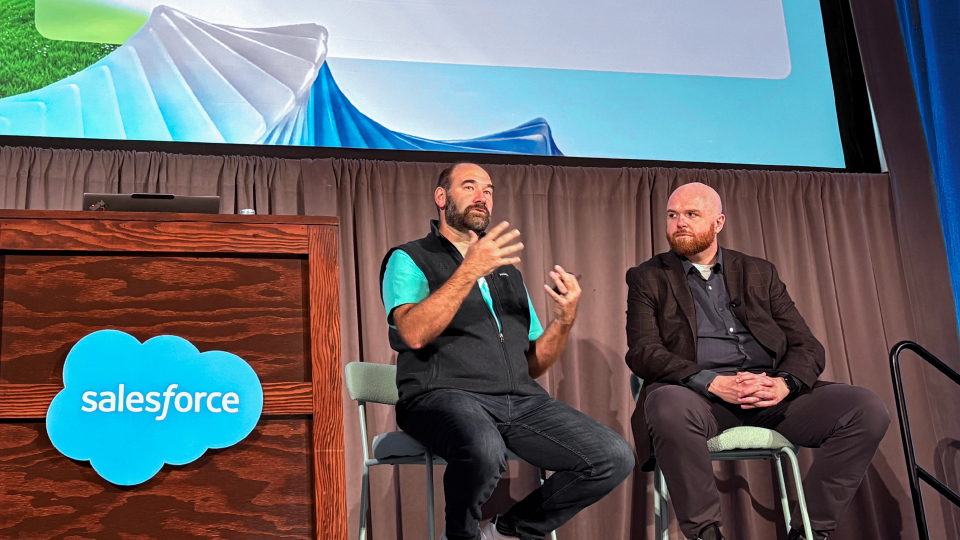


Dreamforce 2026 highlighted the impact AI can have when it enables sellers to focus on building trusted client relationships. Benjamin Kazan, AVP, Information Systems at Manulife global wealth and asset management (GWAM) showcased that exact vision during his on-stage discussion with Riva’s co-founder and CEO, Stéphane Zanoni.
Benjamin spoke about a challenge that many financial services organizations are working through: how to apply AI in a way that gives sellers more time and better context to serve clients.
The conversation focused on lessons that extend well beyond any one organization. As AI becomes more capable and more common in the workplace, business leaders should consider its effect on client relationships, employee experience, and the quality of work that follows.
Here are five takeaways from the discussion:
1. AI Should Strengthen Client Relationships
Financial services has always been, and will continue to be, relationship driven. Technology can help organizations work more efficiently, but its greatest value comes when it enables advisors to make stronger human connections.
AI can reduce time spent on administrative tasks, finding information, and documenting interactions. That saved time matters when advisors can reinvest it in preparing for client meetings, following through on commitments, and having more informed conversations.
For organizations evaluating AI initiatives, this creates an important test: Does the technology help advisors spend more of their time where they can make a meaningful difference for clients?
2. Relevant Context Helps Advisors Take Action
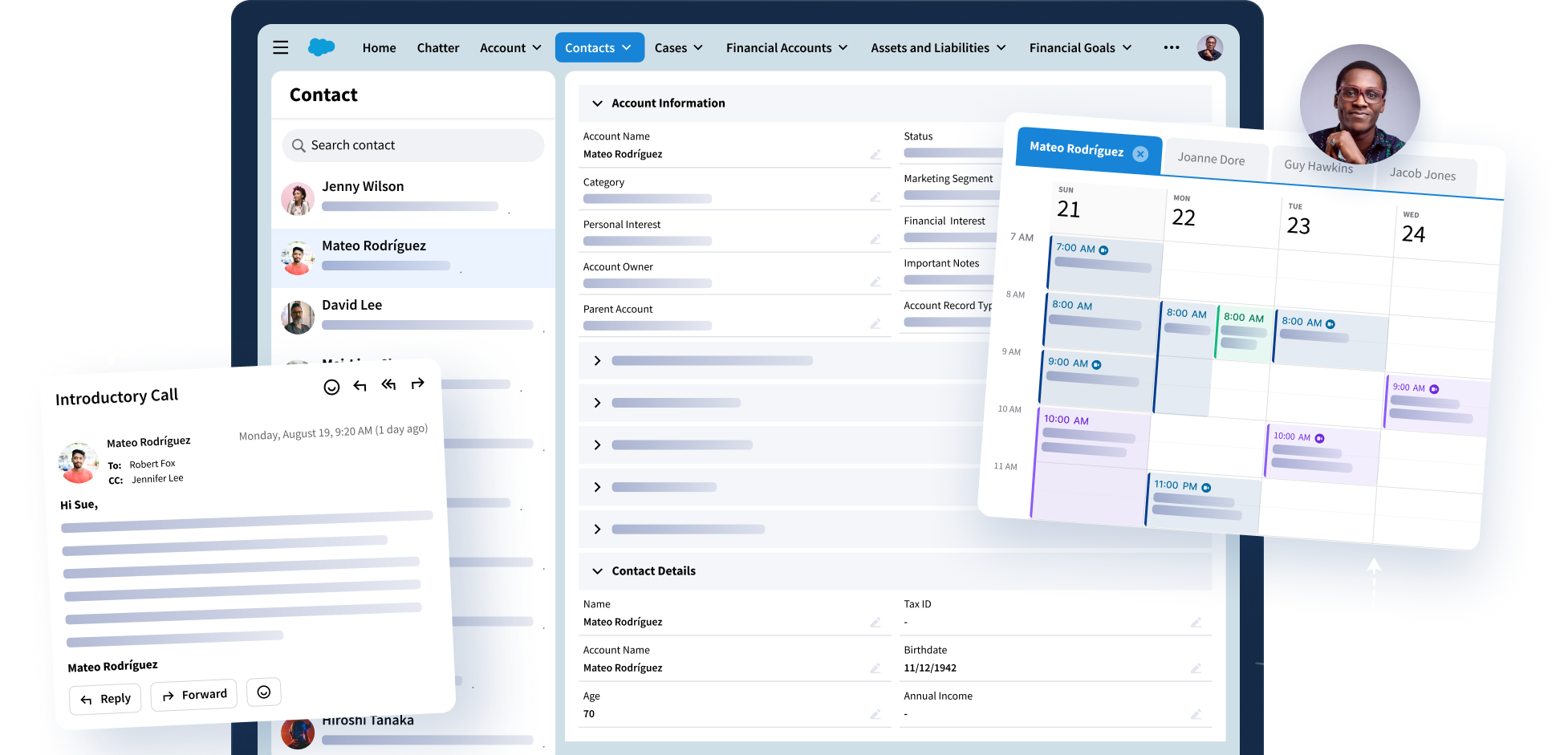
Reliable customer context is foundational to a strong seller experience. Advisors need a clear view of the conversations, commitments, and relationship history that matter before they engage a client.
During the discussion, Stéphane described a challenge that many sellers recognize: account records can be either nearly empty or so full of information that it is difficult to identify what matters. Neither experience helps someone prepare for the next client conversation.
The goal is not simply to add more data to the CRM. It is to provide relevant, trusted customer context in the flow of work, so advisors can understand the relationship and take the next step with confidence.
That requires organizations to think beyond individual tools. Sellers do not experience technology as a collection of platforms. They experience whether the tools around them help them serve a client effectively.
3. AI Value Shows Up in the Work That Follows
Adoption rates and time savings can indicate whether an AI initiative is gaining traction, but they do not tell the whole story. Leaders also need to understand what employees do with the time and capacity AI creates.
For client-facing teams, meaningful outcomes may include more time with clients, better preparation before meetings, and more thoughtful follow-through afterward. These measures connect AI investment to the work that influences relationships and business results.
This approach also helps organizations avoid treating efficiency as the final goal. Saving time creates value when employees can use that time to improve the quality of client engagement.
4. Employee Experience Belongs in the AI Conversation
The seller experience is closely tied to the employee experience. When technology creates unnecessary steps, forces people to move between systems, or makes critical information difficult to find, it adds friction to the workday.
Organizations should assess how AI affects employees alongside more traditional business metrics. Employee feedback can reveal whether a tool gives people the information and support they need to do their jobs well.
Some of these outcomes are harder to quantify than adoption or productivity, but they still matter. A complete view of AI value should account for whether employees can work with more focus, more confidence, and less administrative burden.
5. The Next Phase Calls for Thoughtful Change
AI capabilities will continue to evolve quickly, including new agentic experiences that can support sellers in more ways. The challenge for organizations is to keep innovation grounded in human outcomes.
That means introducing new capabilities with a clear purpose, defined guardrails, and human review where it matters. It also means giving employees time to adapt, share feedback, and build confidence in new ways of working.
Organizations that manage this change well can move faster without overwhelming the people expected to use the technology every day.
Keeping the Seller Experience at the Center
The conversation with Manulife GWAM reinforced a simple yet powerful idea: the most valuable AI initiatives help people build stronger client relationships.
As financial services organizations continue to invest in AI, advisor experience should remain a core checkpoint. When AI works with trusted customer context and supports people in the moments that matter, it can help teams deliver more informed, more consistent client engagement.
Riva is grateful to Benjamin and Manulife GWAM for joining us at Dreamforce and contributing to this important industry conversation.
Want to learn more about using AI to strengthen client relationships?
Book a demo to see how Riva brings trusted customer context into your flow of work.