

Meeting AI has moved quickly from novelty to expectation. Teams want summaries, action items, follow-up prompts, searchable meeting history, and less time spent reconstructing conversations after the fact. For client-facing roles, the appeal is obvious. Meetings are where priorities are clarified, commitments are made, risks surface, and relationships move forward.
Yet in regulated industries, enthusiasm for meeting AI often runs into a practical barrier: how the intelligence is captured.
That capture model matters. It can determine whether meeting AI feels useful, trusted, and ready for enterprise adoption, or whether it creates new questions for clients, advisors, security, compliance, IT, and CRM teams.
For regulated enterprises, the next phase of meeting AI will not be defined by who can generate the fastest recap. It will be defined by who can capture meeting intelligence in a way that respects the meeting experience, fits approved workflows, and connects what was discussed to the systems where work continues.
Meeting Intelligence Starts Before the Summary
Most meeting AI conversations start with the output. Can it summarize the meeting? Can it identify next steps? Can it draft follow-up? Can it pull out risks, decisions, and objections?
Those outputs matter. They can reduce manual work and help teams act faster. Salesforce research found that sales reps spend 70% of their time on non-selling tasks, including administrative work and meeting preparation. That is exactly the kind of burden meeting intelligence should help reduce.
Beyond Output Quality: Seven Questions to Consider
Regulated teams also need to understand the path meeting data takes before it becomes a summary. While an AI meeting summary may be useful, regulated enterprises need confidence in the workflow behind it. These seven questions are essential for adoption.
- How was the meeting captured?
- Was a visible AI participant added to the call?
- Was the recording created through an approved enterprise platform?
- Where is the transcript stored?
- Who can access the output?
- How does the intelligence connect to CRM and relationship workflows?
- What can the user review before anything is saved or acted on?
The Bot Changes the Room
Visible AI participants can be helpful in many environments. They make capture simple, especially for teams that want a quick record of every conversation.
In sensitive client conversations, however, a visible bot can change the room.
The client may ask who or what joined the meeting. The advisor may need to explain the tool. The conversation may become more guarded. Security and compliance teams may ask whether sensitive information is being captured by a third party, how it is retained, and whether the workflow aligns with existing consent and data handling policies.
The friction is both technical and behavioral.
Client meetings rely on trust. They often involve nuance, judgment, and discretion. In wealth management, asset management, commercial banking, insurance, investment banking, life sciences, and professional services, the presence of a new AI participant can create questions that distract from the conversation itself.
For these teams, the capture model is more than a technical detail. It can determine whether meeting AI earns trust, gets used, and improves follow-through.
To keep meeting intelligence moving forward, regulated industries need a capture model that fits the environment.
Find What’s Blocking Your Meeting Intelligence Workflow
Where is your meeting intelligence workflow losing value, creating risk, or adding manual effort?
Use Riva’s quick online assessment to identify the gaps that may be limiting meeting capture, governance, output quality, CRM visibility, AI control, and relationship continuity. Based on your results, you’ll see where your biggest risks and opportunities are, with guidance to help you improve meeting capture, strengthen governance, support human review, and connect trusted meeting intelligence to CRM.
Governance Is Becoming Part of the User Experience
AI governance is often discussed as a back-office concern, but in meeting intelligence, governance touches the user experience directly.
If an advisor hesitates to use a tool because a bot joins the call, governance has affected adoption. If a compliance team blocks a meeting recorder because the data path is unclear, governance has affected rollout. If meeting summaries live outside CRM and activity history, governance has affected business value.
Cisco’s 2024 Data Privacy Benchmark Study found that 61% of organizations have limits on which generative AI tools employees can use, and 63% have limits on what data can be entered. Ultimately, this reflects what many regulated enterprises already know: AI adoption depends on control.
For meeting intelligence, control means more than approving a tool. It means knowing how meeting data is captured, where it goes, how it is transformed, who can access it, and how the output becomes part of the relationship record.
Standalone Notes Are a Starting Point, Not the Destination
Many meeting AI tools focus on the personal productivity layer. They help an individual remember what happened, summarize a call, and send follow-up. That has real value, but for enterprise client-facing teams, meeting intelligence needs to go further.
A meeting recap that lives in a personal inbox can still leave the organization with an incomplete relationship record. A transcript stored outside CRM can still require manual interpretation. A set of action items that never connects to an account, contact, opportunity, or activity record can still leave the next team member without context.
The real business value emerges when meeting intelligence becomes part of the broader client relationship picture.
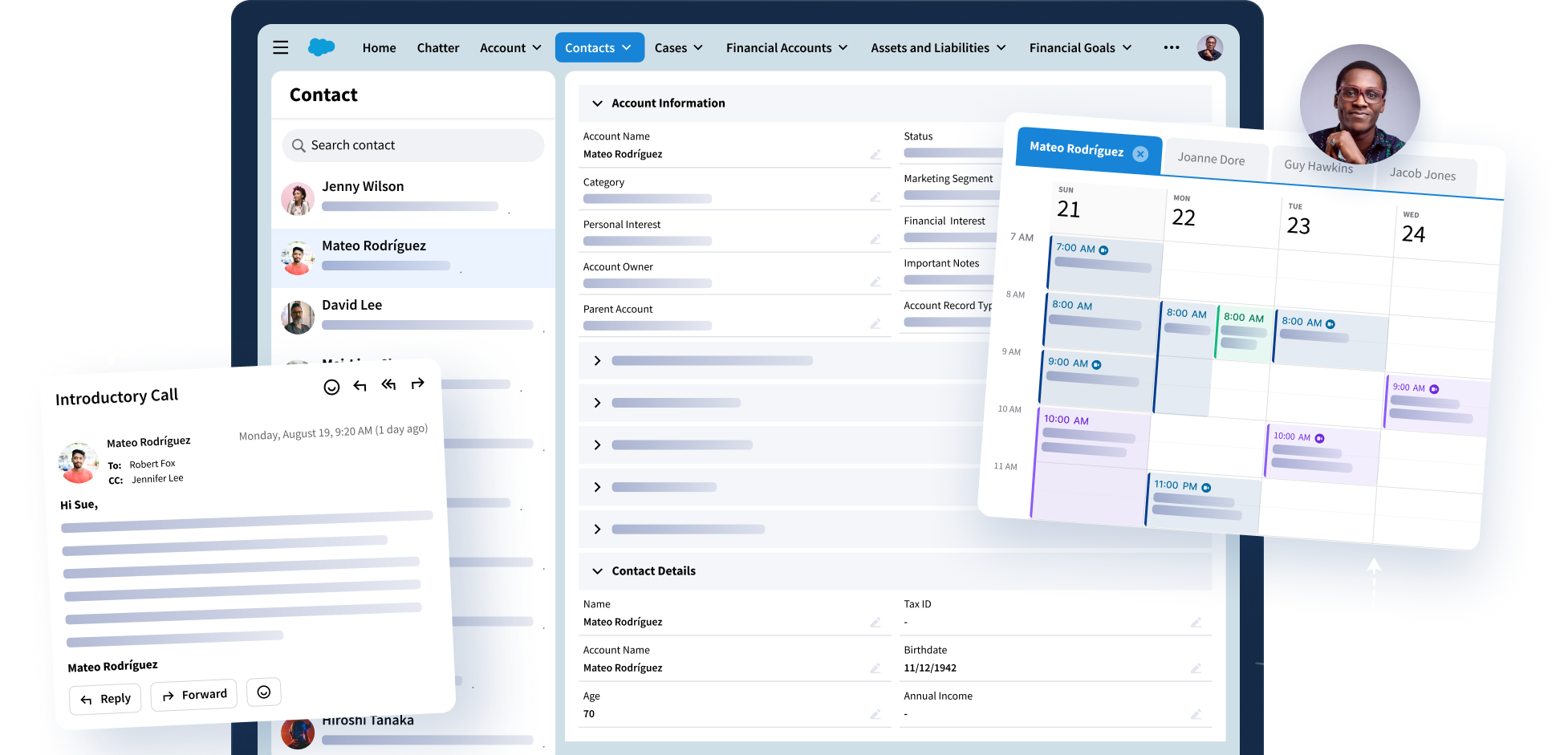
That means decisions, risks, commitments, and next steps should connect to the systems teams already use to manage client work. Meeting intelligence should support CRM quality, follow-through, and continuity across advisors, bankers, relationship managers, operations teams, and leadership.
This is where customer interaction intelligence and relationship intelligence become practical: teams can see what happened, understand what matters, and know what to do next.
The goal is a better way to turn conversations into trusted relationship intelligence, without adding another place for meeting notes to live.
Assess Your Meeting Intelligence Readiness
Is your meeting intelligence workflow ready for regulated client conversations?
Download From Meeting Notes to Meeting Intelligence: A Regulated Enterprise Guide to AI for Client Meetings to help your AI, CRM, compliance, security, and business teams evaluate how your organization captures meeting context, supports consent and governance, enables human review, and connects trusted meeting intelligence to CRM.
A Better Model in Meeting Intelligence Is Emerging
For regulated teams, a stronger meeting intelligence model starts with enterprise-approved sources.
Instead of adding a visible AI participant to the live client conversation, organizations can use meeting recordings and transcripts created through approved Teams or Zoom workflows. Intelligence can then be generated after the meeting, using sources that already fit the organization’s recording policies and governance expectations. This creates a governed meeting intelligence workflow that starts from sources the organization already understands.
This approach also helps preserve the client experience. The meeting can run the way teams and clients expect. The intelligence can be created after the conversation. Security, IT, compliance, CRM, and business teams can evaluate the workflow with a clearer understanding of where data comes from and how it is used.
From there, meeting intelligence needs structure.
Raw meeting transcripts are difficult to operationalize. Useful meeting intelligence turns conversation data into consistent summaries, decisions, risks, tasks, and next steps. It gives users a way to review outputs. It connects intelligence to CRM records and activity history. It helps relationship knowledge stay with the organization instead of living only in personal notes or memory.
That is where meeting AI becomes more than documentation support. It becomes part of the operating model for client work.
Recommended Reading: 5 Ways to Make AI Meeting Transcripts More Actionable in Your CRM
The Future of Meeting AI in Regulated Industries Is Trust, Governance, and Connectivity
Meeting AI has already proven that teams want help capturing what happens in conversations. The next question is whether that intelligence can be captured in a way that regulated enterprises can trust.
The answer depends on three things.
- The workflow should protect the meeting experience. Client conversations should not become more complicated because a team wants better intelligence afterward.
- Governance should be built into the capture model. Approved sources, access controls, review steps, and retention expectations matter from the beginning.
- The output should connect to CRM and relationship workflows. Meeting intelligence has the most value when it improves the systems teams already rely on, not when it creates another disconnected layer.
Regulated organizations do not need less ambition around AI. They need AI adoption models that match the realities of their work.
Read Next: The Hidden Cost of Reconstructing Customer Context Before Every Meeting
Capturing Governed Meeting Intelligence With Riva
Riva has spent years working with regulated, relationship-driven enterprises where CRM adoption, security, compliance, and user experience all affect whether new workflows succeed. Riva Meeting Intelligence applies that experience to meeting capture and follow-through.
Riva Meeting Intelligence helps regulated teams turn approved Teams or Zoom recordings and transcripts into structured, CRM-ready follow-through. Meeting insights and summaries are generated after the meeting, so teams can capture value from client conversations without adding a visible AI participant or changing how the meeting feels.
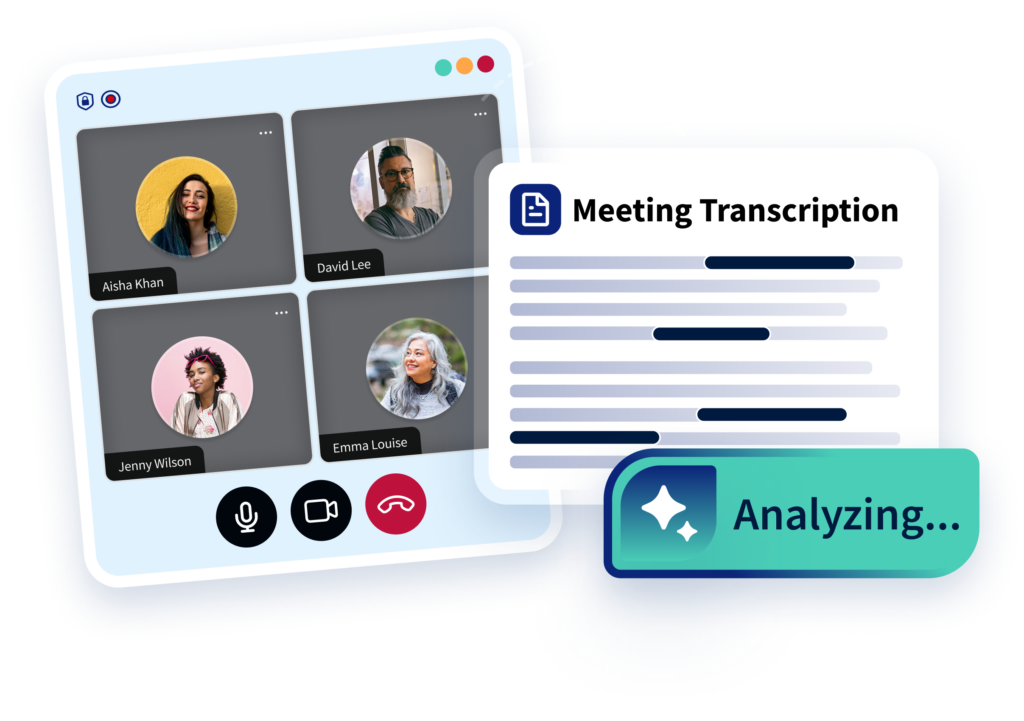
Meeting context becomes more useful when it connects to the systems where work continues. Riva helps teams structure meeting summaries, decisions, tasks, follow-up insights, and next steps so client-facing teams can review meeting outcomes, strengthen CRM data, and follow up with more confidence.
As meeting AI becomes part of enterprise planning, regulated teams need an approach that supports trust, governance, and CRM-ready action from the start.
Book a demo to see how Riva can help you get more from your meetings.
Questions? We Have Answers
What is enterprise meeting intelligence?
What is enterprise meeting intelligence?
Enterprise meeting intelligence helps organizations turn meeting recordings, transcripts, notes, and conversations into actionable business insights. It goes beyond basic meeting summaries by helping teams improve follow-through, customer visibility, and operational efficiency.
Why do regulated enterprises approach AI meeting tools differently?
Why do regulated enterprises approach AI meeting tools differently?
Regulated organizations need confidence in how meeting data is captured, stored, reviewed, and shared. Security, compliance, governance, and customer trust are often just as important as the quality of the meeting summary itself.
How does Riva help enterprises capture customer meeting insights without disrupting the meeting experience?
How does Riva help enterprises capture customer meeting insights without disrupting the meeting experience?
Riva’s Meeting Intelligence helps organizations generate structured meeting summaries and follow-up insights from approved Teams and Zoom recordings. This approach reduces friction, avoids introducing visible AI participants into client conversations, and supports enterprise governance requirements.
How do AI meeting bots affect user adoption and trust?
How do AI meeting bots affect user adoption and trust?
AI meeting bots can simplify notetaking, but they may also change the dynamic of sensitive conversations. In regulated industries, visible AI participants can create concerns around privacy, consent, and data handling, making adoption more challenging.
What governance controls are important for AI meeting workflows?
What governance controls are important for AI meeting workflows?
Organizations should consider access controls, retention policies, auditability, review processes, approved data sources, and clear visibility into how meeting recordings, transcripts, and summaries are handled.
Why is connecting meeting summaries to CRM important?
Why is connecting meeting summaries to CRM important?
Meeting summaries provide value for individuals, but organizations create the greatest impact when meeting outcomes are connected to the right CRM records. When decisions, commitments, risks, and next steps are automatically linked to accounts, contacts, opportunities, and activities, teams gain better visibility into customer relationships and can act with greater confidence. This helps prevent valuable meeting insights from getting buried in personal inboxes, disconnected notes, or individual memory.
How does Riva help teams turn meeting summaries into action?
How does Riva help teams turn meeting summaries into action?
Meeting summaries are most valuable when they lead to follow-through. Riva helps organizations transform meeting outcomes into structured insights, action items, and CRM updates that can be reviewed, tracked, and connected to the customer record, helping teams move from documentation to execution.